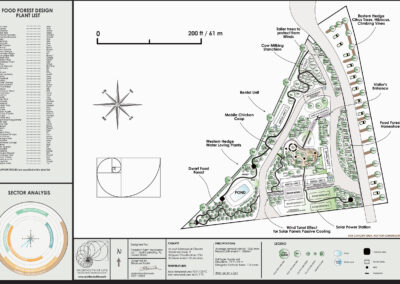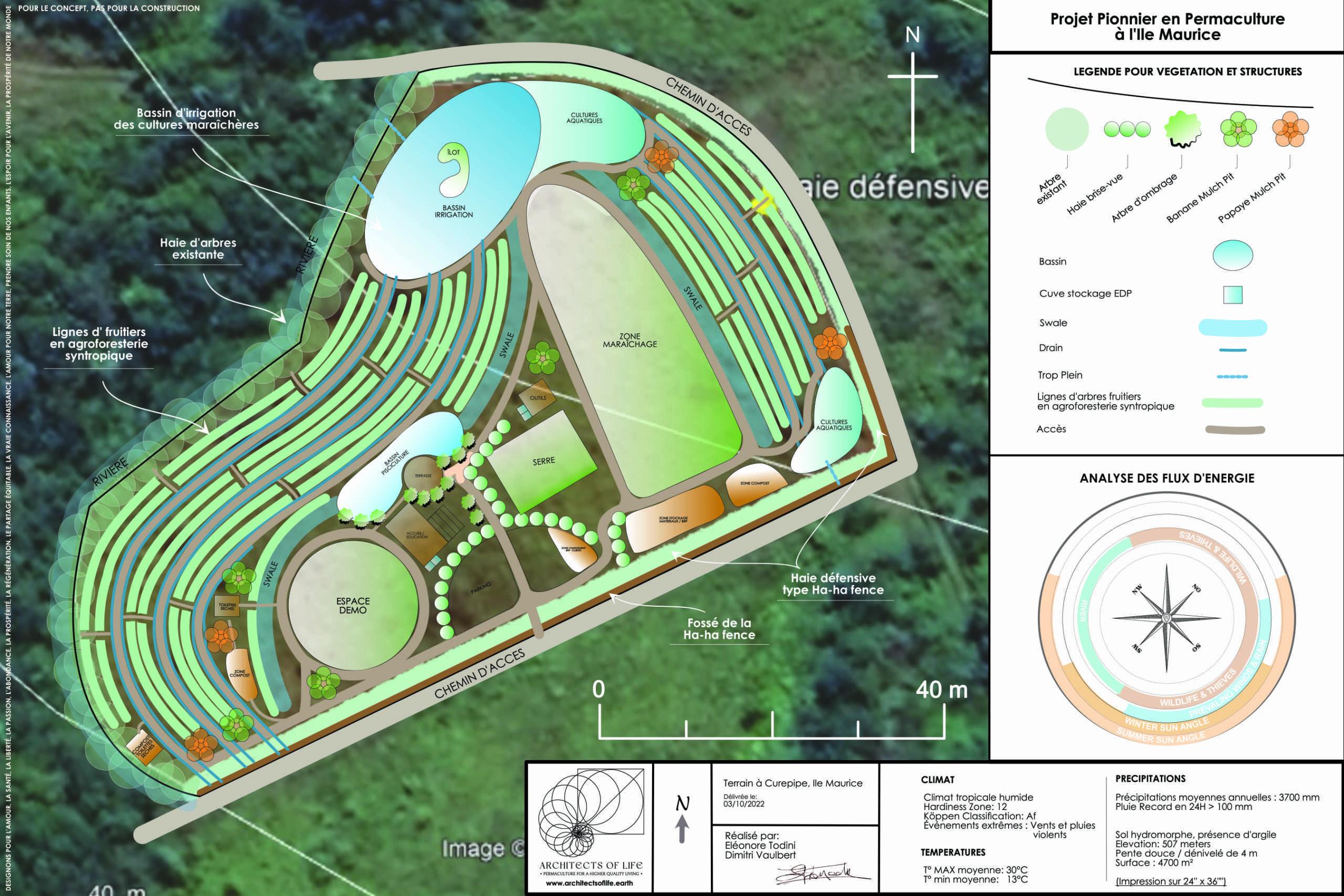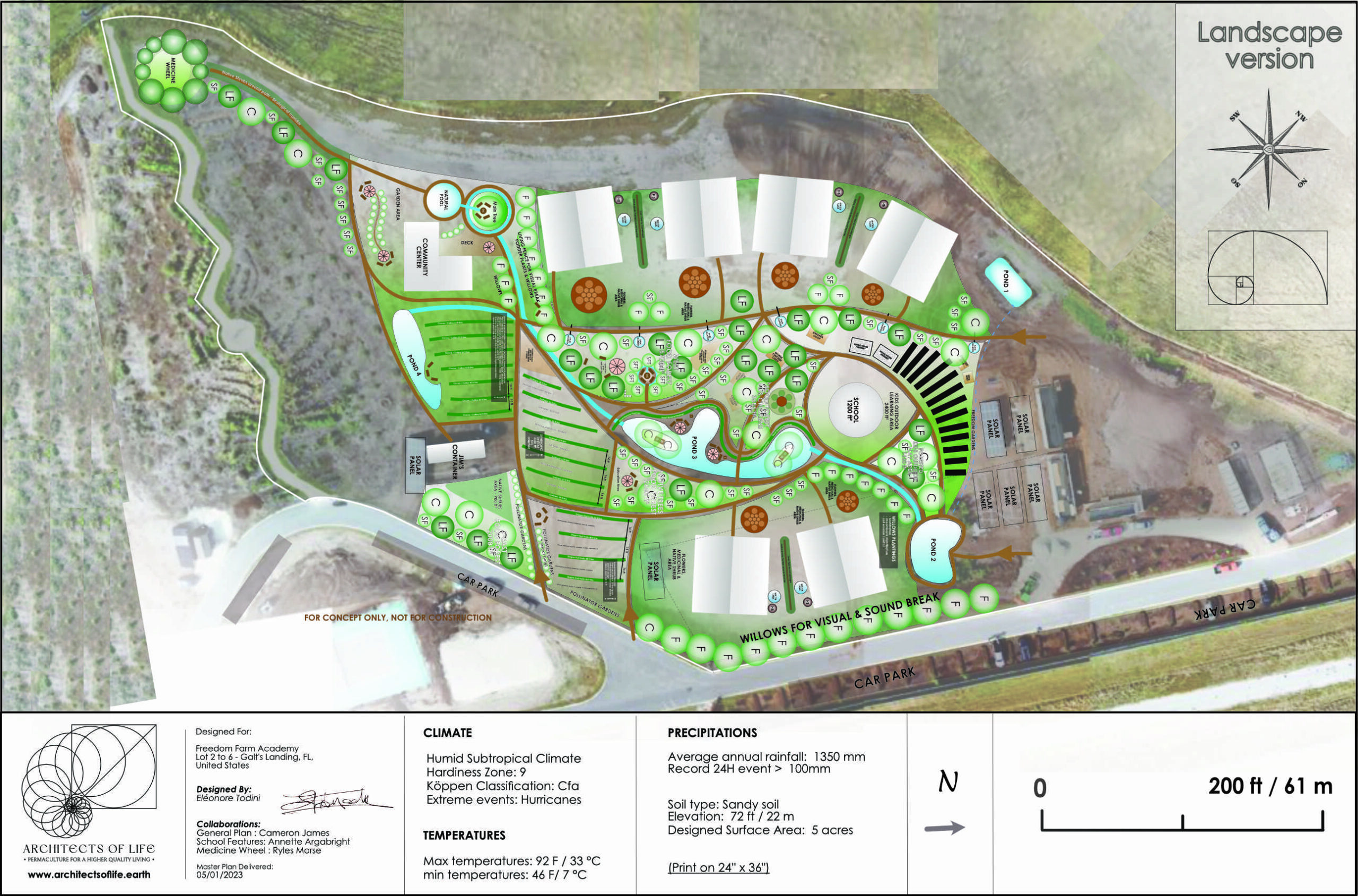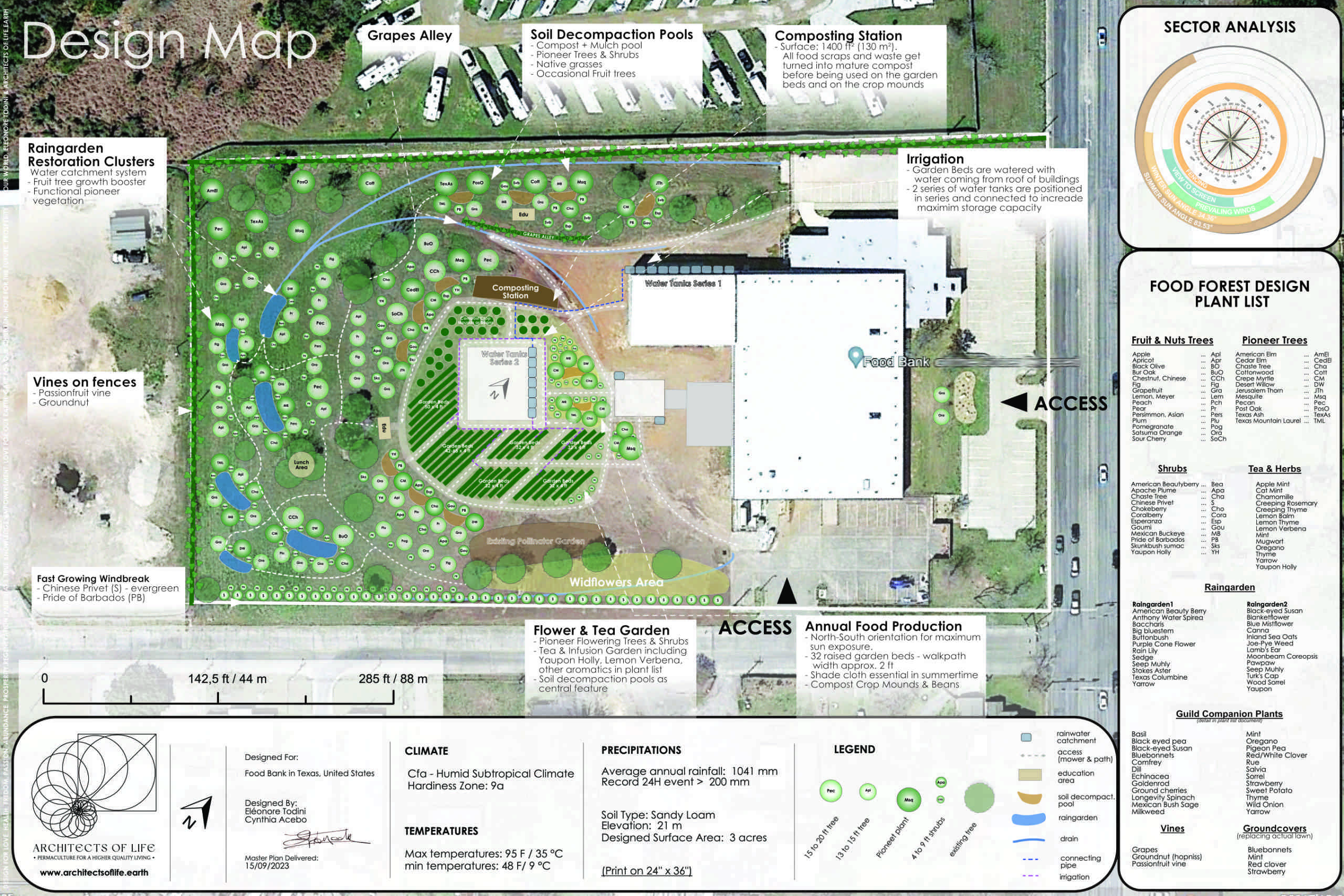
bring life back through regenerative hydrology

Natural context:
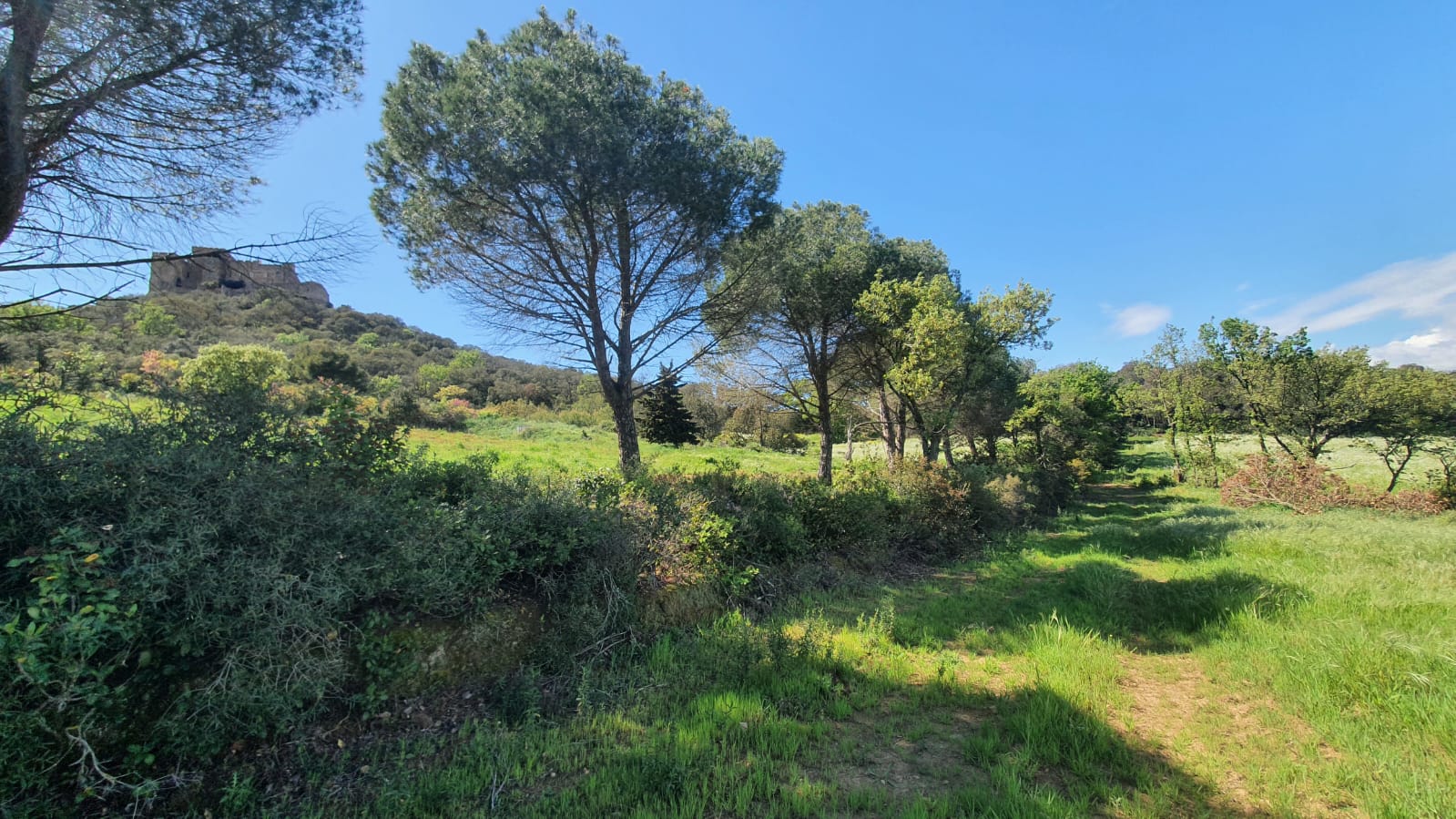
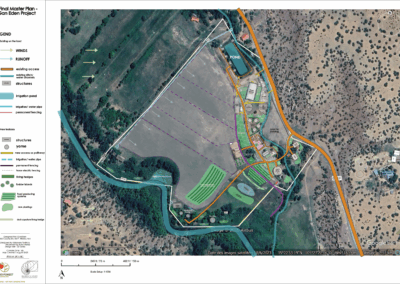
The agricultural project of Saint Martin de Toques, a beautiful Cathar castle 1 hour away from the medieval city of Carcassonne, is focused on restoring soils and water cycles after years of increasing climate stress.
For years the region suffered strong winds and severe droughts, culminating in a sad fire in 2025 that burned more than 17,000 hectares of land. Thanks the angels above, the land of Saint Martin wasn’t touched, but smoke was visible from all around.
Rehydrating the fields is now essential to create long-term resilience and rise as a pioneer site in the region to help other farmers doing the same: store water in the ground, prevent fires, plant windbreaks, reduce evaporation and erosion, rebuild vegetation, bring back in animals managed in a correct way and restore soil fertility quicker.
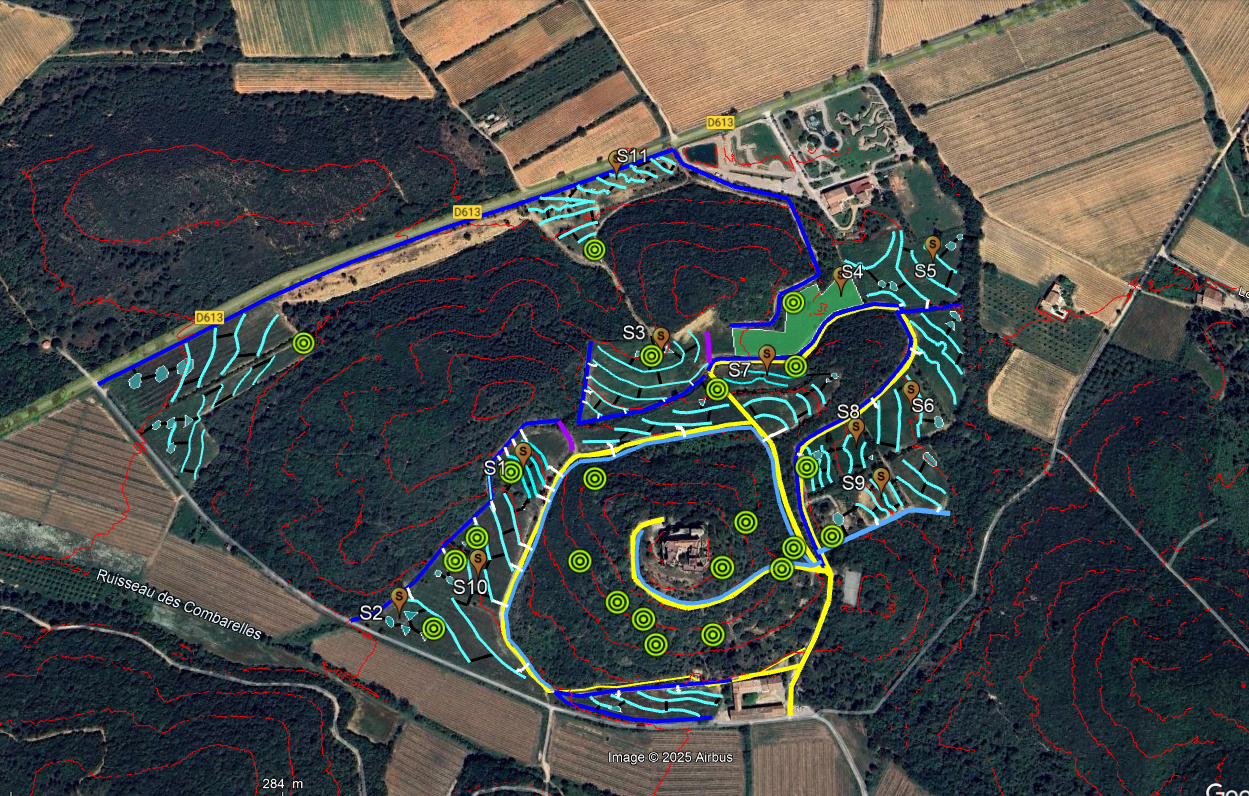
To meet this challenge, a large-scale water retention system has been designed. The system is combined with holistic animal grazing, food producing systems with species adapted to the local evolving microclimate, forage systems and hardy windbreaks.
In this article we’ll be focusing ONLY on the water retention system for the main parcels of the site.
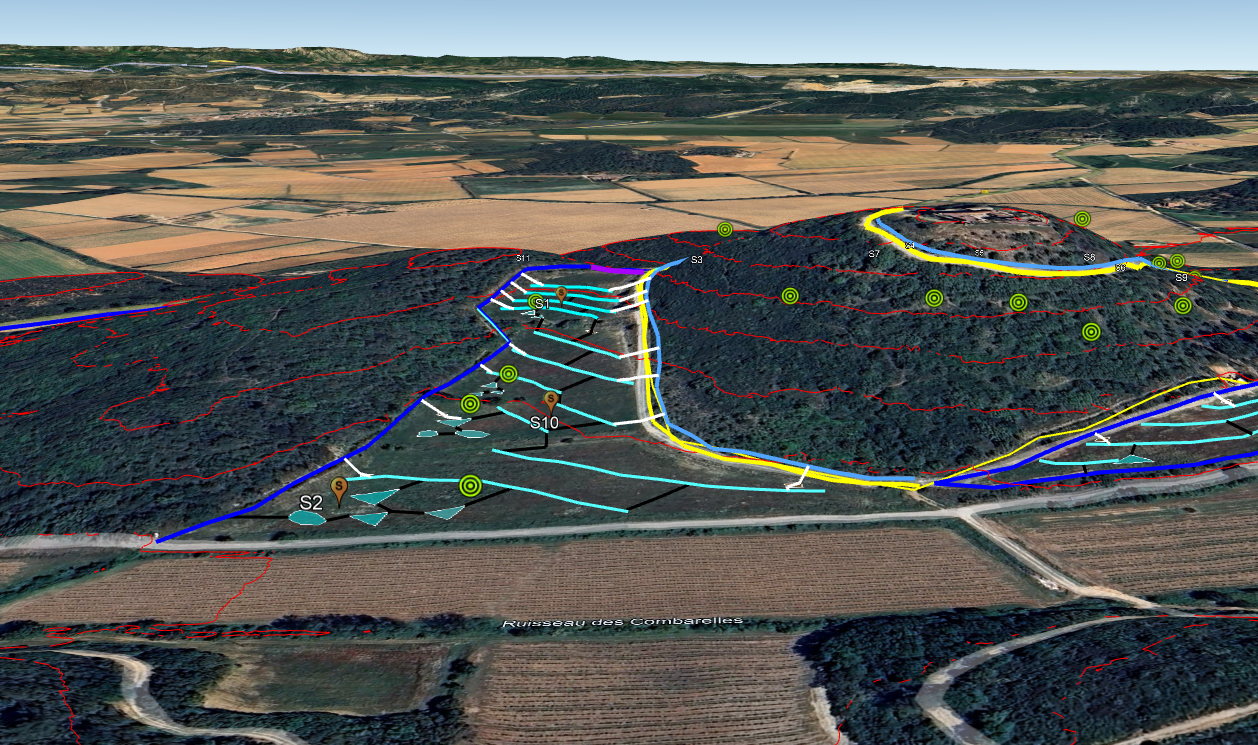
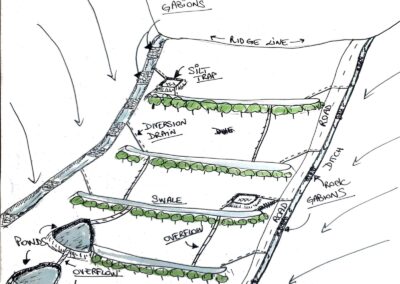
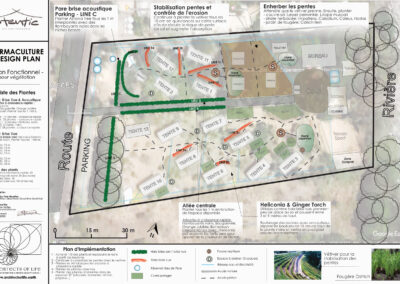
By guiding runoff through drains, pools, swales, and ponds, rainfall is slowed, filtered, and absorbed into the soil instead of being lost. The system works step by step, from the highest points of the slope down to the valleys.
First: capturing, slowing down and filtering runoff:
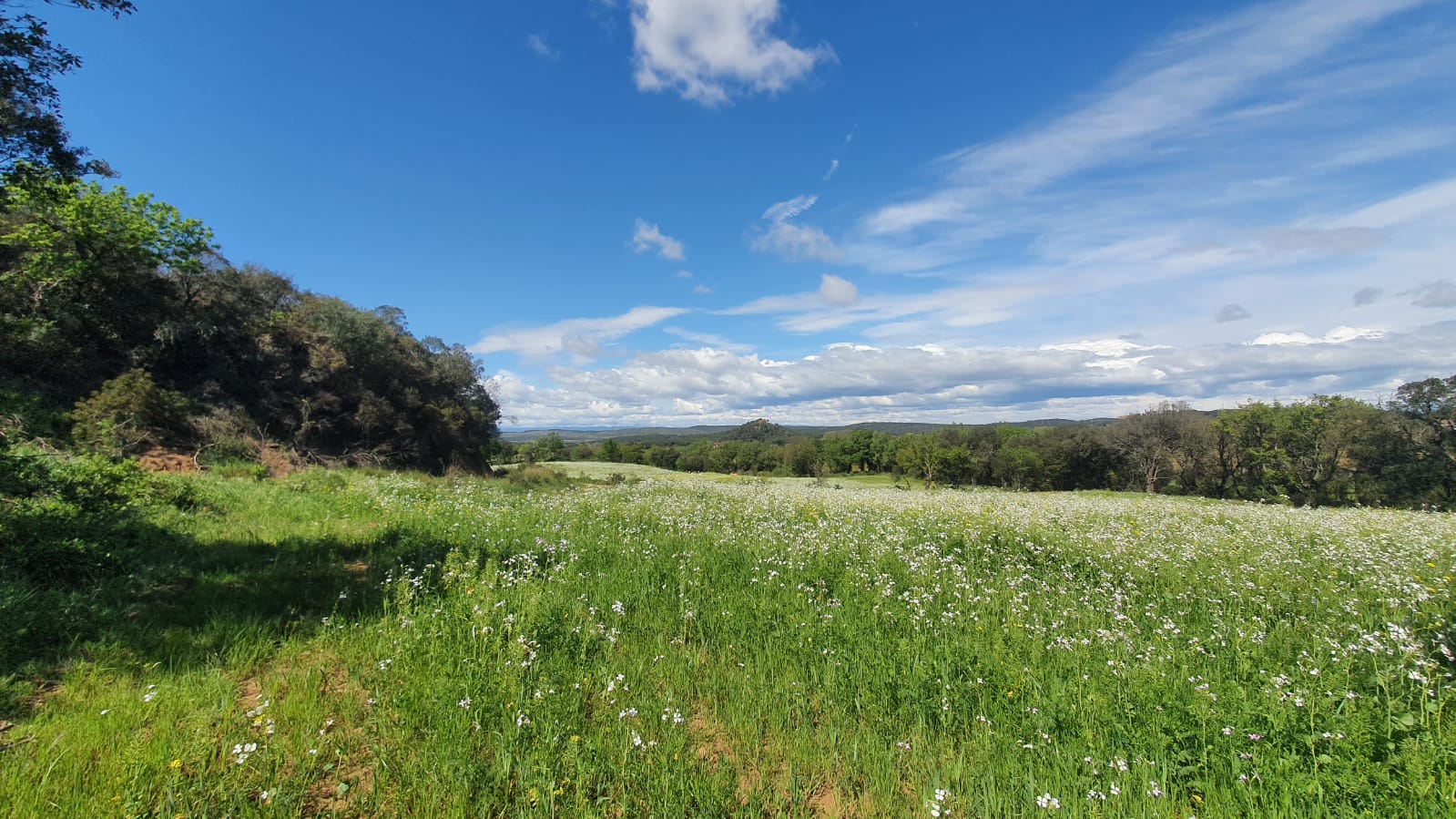
The land is punctuated with forested hills and open fields that were wineyards, long time ago.
Main collector drains, laid perpendicular to the slope, intercept water flowing down from the steep hills. Rock gabions are strategically placed at several locations in the drains to break water velocity and reduce the erosion at the bottom of the drain beds.
Part of the runoff water is then guided into smaller diversion drains that feed the swales.
At the end of some diversion drain, a sediment pool allows silt to settle before cleaner water is piped into the swale below. This protects the system and gradually creates deposits of fertile soil, that can be used as loam for the plants in the nursery.
Then: swales as infiltration points in the landscape:
Swales, level ditches dug along contour lines, are the key to infiltration. They hold water long enough for it to seep into the ground, recharging soil moisture and groundwater.
Each swale has a stabilized spillway to safely pass excess water to the swale downslope. This creates a cascade of hydration across the field and insures that each drop of water gets into the ground.
The swales are planted with hardy local species that require little care and provide multiple benefits: windbreak, fodder for animals, deep roots for soil building and organic matter for fertility. These plants also stabilize the banks, turning each swale into a living structure.
Linking swales to ponds:
The last swale at the bottom of each field channels runoff into a chain of small ponds. Why do we prefer several smaller and deeper ponds to a large, shallow pond? Because this reduces evaporation and distributes stored water more evenly.
The final pond of each field connects to the first swale of the next, forming a continuous cycle of water retention across the land.
Restoring the water cycle:
Together, drains, pools, swales, and ponds rebuild the hydrology of the land. Instead of rushing away, rainfall is absorbed, stored, and shared with the ecosystem. Over time, soils regain fertility, vegetation cover increases, and the land becomes more resilient to both droughts and floods.
Technology on site:
- A technical follow up of each parcel will be done with one of these softwares: XFarm, Agroptima or SmagFarmer.
- Fully automated biodiversity measurements through sound will be operated with Synature, to observe the evolution of the ecosystem over the years.
- Sypgen eDNA-based biodiversity inventories with will provide us with the most robust and exhaustive species inventories, across time and space.
Collaborations: Nicolas Mirouze from Château Beauregard-Mirouze and Atelier Paysan, AP11
Implementation of the project is projected for year 2026.